High-Purity Lithium Salts for Advanced Research Applications
Kanto Chemical offers a comprehensive range of high-purity lithium salts and electrolyte-grade solvents, essential for cutting-edge battery research and other high-performance applications. These reagents feature ultra-low moisture content and are supplied with guaranteed specifications for metal impurities and other contaminants.
Each product is packaged in argon-filled glass containers and enclosed in lami-zip bags with desiccant to preserve quality. After opening, we recommend resealing with inert gas to prevent air contamination and maintain long-term stability.
Our products are widely used in the development of lithium-ion, sodium-ion, and potassium-ion batteries, ionic liquid synthesis, and other purity-critical chemical processes. Whether for academic research or industrial innovation, Kanto’s lithium salts deliver the quality and reliability you need.
Electrolytes
The electrolyte serves as a source of metal ions (M⁺), which play a crucial role in batteries’ charging and discharging cycles. For example:
- Lithium-ion batteries utilize Li⁺ ions
- Sodium-ion batteries utilize Na⁺ ions
- Potassium-ion batteries utilize K⁺ ions
These metal ions migrate between the electrodes, enabling the electrochemical reactions that store and release energy.
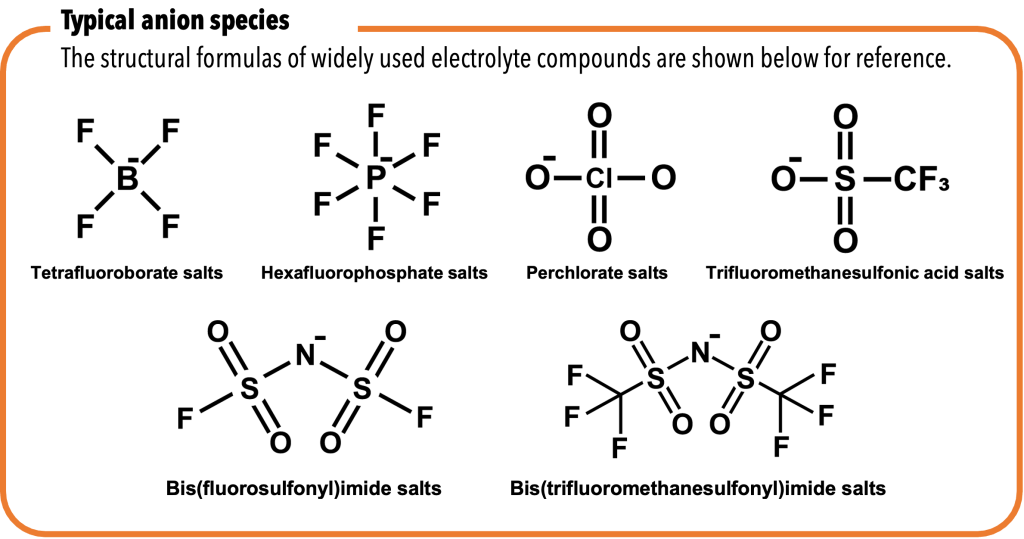
Lithium Salt -Li-
| PRODUCT CODE | ITEM | FORMULA | GRADE | CAS NO. | PAXKAGE |
|---|---|---|---|---|---|
| 24077-35 | Lithium hexafluorophosphate |
LiPF6 |
for advanced material research | 21324-40-3 | 25 g |
| 24077-25 | 100 g | ||||
| 24078-35 | Lithium tetrafluoroborate |
LiBF4 |
for advanced material research | 14283-07-9 | 25 g |
| 24078-25 | 100 g | ||||
| 24136-35 | Lithium perchlorate, anhydrous |
LiCIO4 |
for advanced material research | 7791-03-9 | 25 g |
| 24136-25 | 100 g | ||||
| 24076-55 | Lithium bis(fluorosulfonyl)imide | LiFSI LiFSA | for advanced material research | 171611-11-3 | 5 g |
| 24076-35 | 25 g |
Specification Sample
Lithium hexafluorophosphate [LiPF6]
| Item | Unit | Specification |
| Purity | % | min. 99.5 |
| Water | % | max. 0.005 |
| Chloride (Cl) | % | max. 0.003 |
| Bromide( Br) | % | max. 0.003 |
| Nitrate (NO3) | % | max. 0.003 |
| Phosphate (PO4) | % | max. 0.003 |
| Sulfate (SO4) | % | max. 0.003 |
| Barium (Ba) | % | max. 0.001 |
| Calcium (Ca) | % | max. 0.001 |
| Iron (Fe) | % | max. 0.001 |
| Potassium (K) | % | max. 0.001 |
| Magnesium (Mg) | % | max. 0.001 |
| Sodium (Na) | % | max. 0.001 |
| Lead (Pb) | % | max. 0.001 |
Lithium bis(fluorosulfonyl)imide [LiFSI]
| Item | Unit | Specification |
| Purity | % | min. 99.5 |
| Water | % | max. 0.02 |
| Chloride (Cl) | % | max. 0.003 |
| Bromide( Br) | % | max. 0.003 |
| Nitrate (NO3) | % | max. 0.003 |
| Phosphate (PO4) | % | max. 0.003 |
| Sulfate (SO4) | % | max. 0.003 |
| Barium (Ba) | % | max. 0.001 |
| Calcium (Ca) | % | max. 0.001 |
| Iron (Fe) | % | max. 0.001 |
| Potassium (K) | % | max. 0.001 |
| Magnesium (Mg) | % | max. 0.001 |
| Sodium (Na) | % | max. 0.001 |
| Lead (Pb) | % | max. 0.001 |
RELATED ITEM LIST
Lithium Salt -Li-
| PRODUCT CODE | ITEM | FORMULA | GRADE | CAS NO. | PACKAGE |
|---|---|---|---|---|---|
| 24290-35 | Lithium bis(trifluoromethanesulfonyl)imide | LiTFSI LiTFSA | for advanced material research | 90076-65-6 | 25 g |
| 24290-15 | 250 g | ||||
| 24290-95 | 2 kg | ||||
| 24042-35 | Lithium trifluoromethanesulfonate | LiOTf LiTFS | for advanced material research | 33454-82-9 | 25 g |
| 24042-25 | 100 g | ||||
| 24041-35 | Lithium nonafluorobutanesulfonate | LiNfO | for advanced material research | 131651-65-5 | 25 g |
Sodium Salt -Na-
| PRODUCT CODE | ITEM | FORMULA | GRADE | CAS NO. | PACKAGE |
|---|---|---|---|---|---|
| 37130-01 | Sodium tetrafluoroborate |
NaBF4 |
Extra pure | 13755-29-8 | 500 g |
| 37232-30 | Sodium perchlorate, anhydrous |
NaCIO4 |
Guaranteed reagent | 7601-89-0 | 25 g |
| 37232-00 | 500 g | ||||
| 40851-32 | Trifluoromethanesulfonic acid sodium salt | NaOTf | - | 2926-30-9 | 25 g |
Potassium Salt -K-
| PRODUCT CODE | ITEM | FORMULA | GRADE | CAS NO. | PACKAGE |
|---|---|---|---|---|---|
| 32843-35 | Potassium hexafluorophosphate |
KPF6 |
Organics | 17084-13-8 | 25 g |
| 32317-01 | Potassium tetrafluoroborate |
KBF4 |
Extra pure | 14075-53-7 | 500 g |
| 32371-30 | Potassium perchlorate |
KCIO4 |
Guaranteed reagent | 7778-74-7 | 25 g |
| 32371-00 | 500 g | ||||
| 33005-35 | Potassium bis(trifluoromethanesulfonyl)imide | KTFSI KTFSA | for advanced material research | 90076-67-8 | 25 g |
| 33005-15 | 250 g | ||||
| 33005-95 | 2 kg | ||||
| 33013-35 | Potassium trifluoromethanesulfonate | KOTf | for advanced material research | 2926-27-4 | 25 g |
| 33013-25 | 100 g | ||||
| 33008-65 | Potassium bis(nonafluorobutanesulfonyl)imide |
(C4F9SO2)2 NK |
for advanced material research | 129135-87-1 | 1 g |
| 33008-55 | 5 g |
Dehydrated Solvent – for electrochemistry
| PRODUCT CODE | ITEM | FORMULA | CAS NO | PACKAGE |
|---|---|---|---|---|
| 14121-23 | Ethylene glycol dimethyl ether (Monoglyme) [DME] |
CH3OCH2CH2OCH3 |
110-71-4 | 100 mL |
| 14121-08 | 500 mL | |||
| 10232-23 | Diethylene glycol dimethyl ether (Diglyme) [DMDG] |
(CH3OCH2CH2)2O |
111-96-9 | 100 mL |
| 10232-08 | 500 mL | |||
| 40276-23 | Triethylene glycol dimethyl ether (Triglyme) [DMTG] |
CH3(OCH2CH2)3OCH3 |
112-49-2 | 100 mL |
| 40276-08 | 500 mL | |||
| 14086-25 | Ethylene carbonate [EC] |
C3H4O3 |
96-49-1 | 100 g |
| 14086-05 | 500 g | |||
| 14741-23 | Ethyl methylcarbonate [EMC] |
C4H8O3 |
623-53-0 | 100 mL |
| 14741-08 | 500 mL | |||
| 32455-23 | Propylene carbonate [PC] |
C4H6O3 |
108-32-7 | 100 mL |
| 32455-08 | 500 mL | |||
| 14075-23 | Diethyl carbonate [DEC] |
(C2H5O)2CO |
105-58-8 | 100 mL |
| 14075-08 | 500 mL | |||
| 10340-23 | Dimethyl carbonate [DMC] |
(CH3O)2CO |
616-38-6 | 100 mL |
| 10340-08 | 500 mL | |||
| 01030-23 | Acetonitrile [ACN] |
CH3CN |
75-05-8 | 100 mL |
| 01030-08 | 500 mL | |||
| 32130-23 | Propionitrile [EtCN] |
CH3CH2CN |
107-12-0 | 100 mL |
| 32130-08 | 500 mL | |||
| 04512-23 | 4-Butyrolactone [γ-Butyrolactone] |
C4H6O2 |
96-48-0 | 100 mL |
| 04512-08 | 500 mL | |||
| 25336-23 | N-Methyl-2-pyrrolidinone [NMP] |
CH3NC4H6O |
872-50-4 | 100 mL |
| 25336-09 | 500 mL |
| PRODUCT CODE | ITEM | FORMULA | CAS NO | PACKAGE |
|---|---|---|---|---|
| 14060-25 | Ethyl acetate, dehydrated -Super- | Organics | 141-78-6 | 100 mL |
| 14060-05 | 500 mL | |||
| 11339-25 | N,N-Dimethylformamide, dehydrated -Super- | Organics | 68-12-2 | 100 mL |
| 11339-05 | 500 mL | |||
| 10380-25 | N,N-Dimethylformamide, dehydrated -Super- | Organics | 67-68-5 | 100 mL |
| 10380-05 | 500 mL | |||
| 40500-25 | Toluene, dehydrated -Super- | Organics | 108-88-3 | 100 mL |
| 40500-05 | 500 mL | |||
| 02016-08 | Anisole, dehydrated -Super- | Organics | 100-66-3 | 500 mL |
| 26192-08 | Mesitylene, dehydrated -Super- | Organics | 108-67-8 | 500 mL |
| 26193-08 | Monochlorobenzene, dehydrated -Super- | Organics | 108-90-7 | 500 mL |
| 05863-08 | Butyl acetate, dehydrated | Organics | 123-86-4 | 500 mL |
Mixture Solvent – for electrochemistry
The electrolyte used in lithium-ion batteries is generally a mixture of cyclic carbonates such as ethylene carbonate (EC) and chain carbonates such as dimethyl carbonate (DMC) and ethyl methyl carbonate (EMC). We offer a wide range of mixed solvent products. Contact us for customized formulations and other requirements.
| PRODUCT CODE | ITEM | FORMULA | CAS NO | PACKAGE |
|---|---|---|---|---|
| 14065-23 | Ethylene carbonate/Dimethyl carbonate=1:1(v/v%) | EC:DMC = 1:1(v/v%) | for electrochemistry | 100 mL |
| 14065-08 | 500 mL | |||
| 14066-23 | Ethylene carbonate/Diethyl carbonate=1:1(v/v%) | EC:DEC = 1:1(v/v%) | for electrochemistry | 100 mL |
| 14066-08 | 500mL | |||
| 14067-23 | Ethylene carbonate/Ethyl methyl carbonate=1:1(v/v%) | EC:EMC = 1:1(v/v%) | for electrochemistry | 100 mL |
| 14067-08 | 500mL | |||
| 14068-23 | Ethylene carbonate/Ethylene glycol dimethyl ether=1:1(v/v%) | EC:DME = 1:1(v/v%) | for electrochemistry | 100 mL |
| 14068-08 | 500mL |
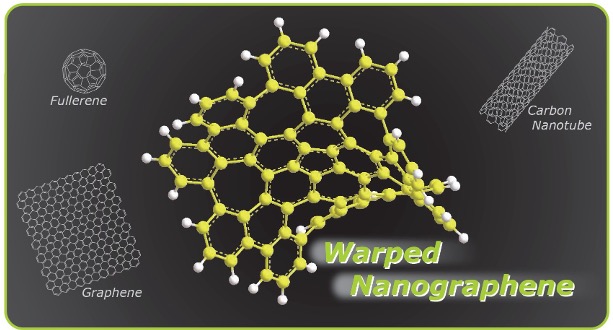
Warped Nanographene (WNG) is a newly developed carbon nanomaterial with a uniquely distorted structure, distinct from traditional nanocarbons like spherical fullerenes, tubular carbon nanotubes, and flat graphene sheets. This innovative material is expected to open new research and development possibilities due to its potentially novel optical and electrical properties. Kanto Chemical now offers WNG, developed through a two-step synthesis from Corannulene by Prof. Itami (Nagoya University, Institute of Transformative Bio-Molecules) and Prof. Segawa (Nagoya University, School of Science).
Features of Warped Nanographene (WNG)
| PRODUCT CODE | ITEM | IMAGE | PACKAGE |
|---|---|---|---|
| 45043-65 | Warped nanographene |
 |
10 mg |
| CAS NO 1448513-72-1 | |||
|
C80H30 |
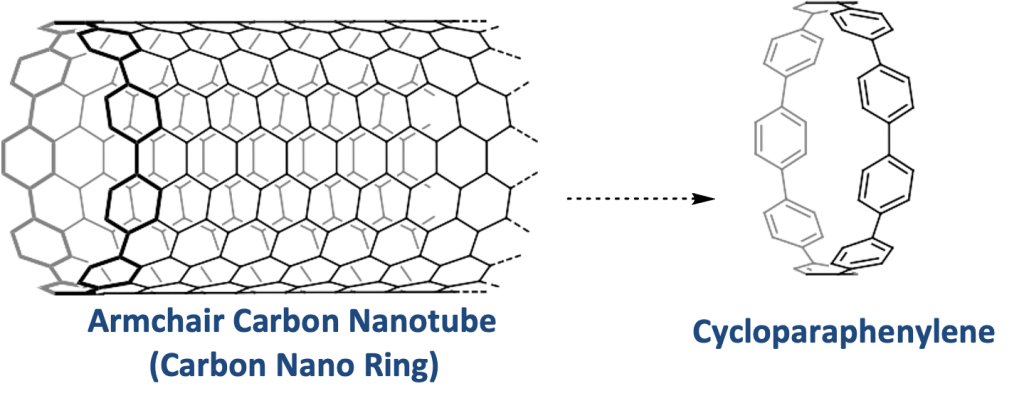
Cycloparaphenylene
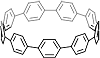
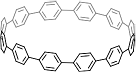
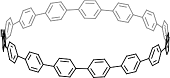
Carbon Nanotubes (CNTs) are advanced carbon materials known for their exceptional mechanical strength and high electrical conductivity, making them suitable for various applications. While precise synthesis methods for controlling CNT diameter and structure remain a challenge, Prof. Itami and Prof. Segawa of Nagoya University achieved a breakthrough by synthesizing uniform CNTs using Cycloparaphenylene (CPP) as a template through a bottom-up approach. This method, a world first, has drawn interest from researchers in fundamental chemistry and materials science. Kanto Chemical supplies CPP variants such as [9], [12], and [15]Cycloparaphenylene for research and development.
| PRODUCT CODE | ITEM | CAS NO | FORMULA | IMAGE | PACKAGE |
|---|---|---|---|---|---|
| 08131-35 | [9]Cycloparaphenylene | 1092522-74-1 |
C54H36 |
 |
20mg |
| 08132-35 | [12]Cycloparaphenylene | 1092522-75-2 |
C72H48 |
 |
20mg |
| 08137-65 | [15]Cycloparaphenylene | 1222565-89-0 |
C90H60 |
 |
10mg |
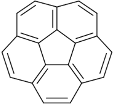
Corannulene
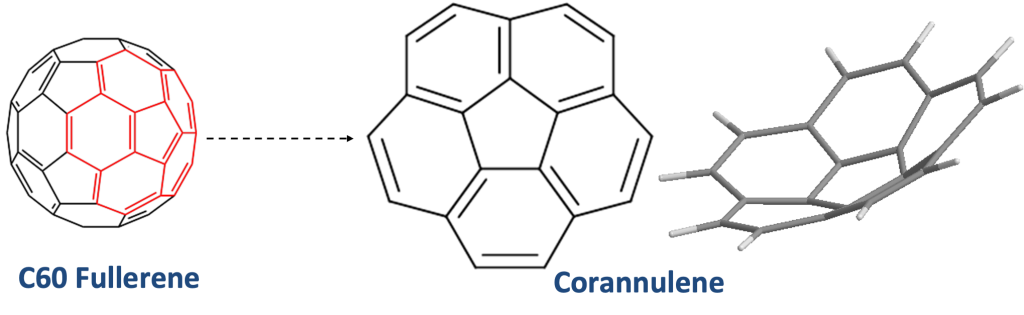
Corannulene, also known as [5]circulene, is a polycyclic aromatic compound composed of five fused benzene rings. It is of great interest as a nanocarbon material because it serves as a unit structure of C₆₀ fullerene, attracting significant attention from researchers in fundamental chemistry and material science.
| PRODUCT CODE | ITEM | CAS NO | Image | PACKAGE SIZE |
| 07363-65 | Corannulene >94.0% | 5821-51-2 |
 |
1g |
| 07363-35 | 25g | |||
| 07435-95 | Corannulene, high purity >99.0% | 5821-51-2 | 500mg |
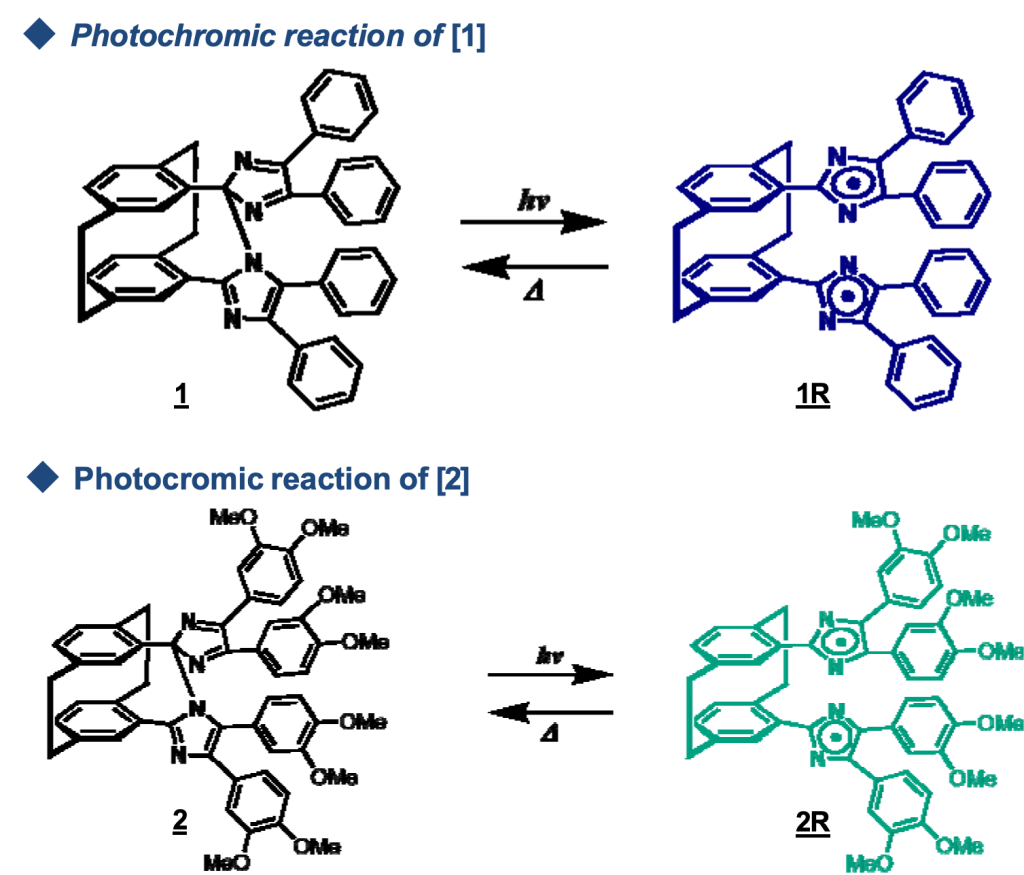
Photochromic compounds
Here’s a simplified one-paragraph version of your text:
Photochromic materials change color when exposed to light and are being studied for use in optical data storage, holograms, and light modulators. They are classified into two types: P-type, which returns to its original form under specific light, and T-type, which reverts thermally but usually takes several minutes at room temperature. Hexaarylbisimidazole (HABI), discovered in the 1960s, is a notable photochromic compound that turns from colorless to purple under UV light and slowly returns to its original form. Kanto Chemical has commercialized novel HABI derivatives—pseudogem-bis(diphenylimidazole)[2.2]paracyclophane and its tetramethoxy version, designed by Prof. Abe of Aoyama Gakuin University. These new compounds show excellent color-switching properties, changing from colorless to blue or green in benzene under UV light and quickly fading back once the light is removed.
| NO | PRODUCT CODE | ITEM | CAS NO | FORMULA | PACKAGE |
|---|---|---|---|---|---|
| [1] | 04425-96 | pseudogem-Bis(diphenylimidazole)[2.2]paracyclophane | 1140231-89-5 |
C46H34N4•C2H5OH |
100mg |
| 04425-95 | 500mg | ||||
| [2] | 04426-68 | pseudogem-Bis(3,3′,4,4′-tetramethoxydiphenylimidazole)[2.2]paracyclophane |
|
100mg | |
| 04426-95 | 500mg |